Sesame Solar June Newsletter Copy


When power fails, missions stall, communities suffer, and response efforts become exponentially more difficult. That's why this month we're highlighting how Sesame Solar's Mobile Nanogrids are transforming energy resilience in some of the world's most demanding environments—from forward-operating defense missions to disaster response and recovery operations.
In both scenarios, reliable power isn't a convenience—it's a necessity, especially as wildfire and hurricane season approaches. By generating clean energy from solar, hydrogen, and battery storage, Mobile Nanogrids eliminate dependence on diesel fuel and the vulnerable supply chains that support it. The result is greater operational flexibility, lower logistical risk, and uninterrupted power when it matters most.
Check out more below as we explore how renewable, self-sustaining power can help ensure response and recovery efforts remain effective, resilient, and ready for whatever comes next.
Team Sesame


The Vertical Space Podcast: The Fuel Convoy is the Target
In a recent episode of The Vertical Space, Lauren Flanagan, CEO of Sesame Solar, joined the conversation to discuss a growing challenge in defense, emergency response, and remote operations: how to generate reliable power when bringing fuel to the field is expensive, difficult, or dangerous. The conversation explores Sesame Solar’s solar, battery, and hydrogen-powered Nanogrids, their role in emergency response and defense, and the emerging opportunity to support long-endurance hydrogen drones in the field.

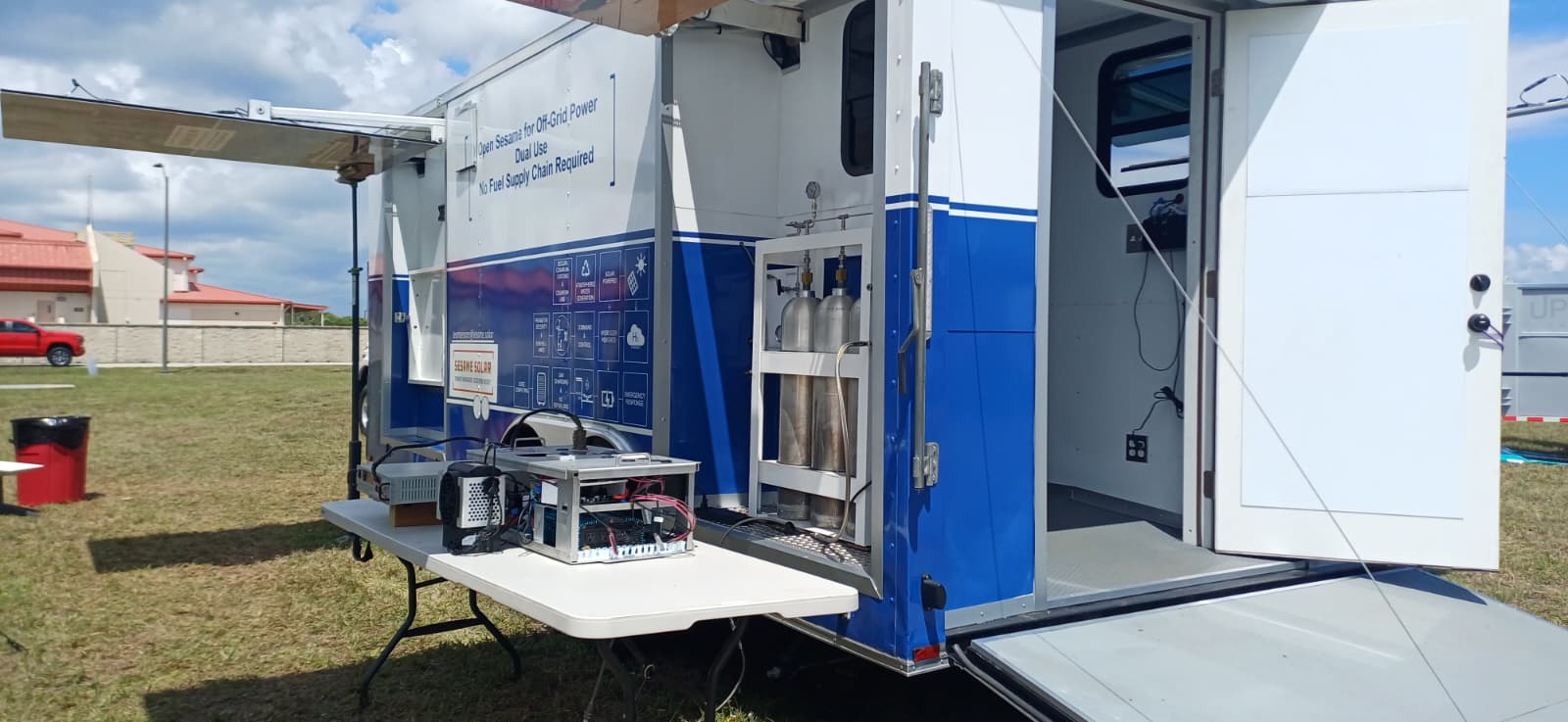
How Mobile Renewable Energy Can Revolutionize Disaster Response and Recovery
Disasters can leave communities without power for days, weeks, or longer, disrupting emergency response, healthcare, communications, and recovery. Mobile renewable energy solutions like Sesame Solar’s Mobile Nanogrids provide rapidly deployable, off-grid power for critical services, helping local governments, responders, and communities stay operational when traditional infrastructure fails.
.png)
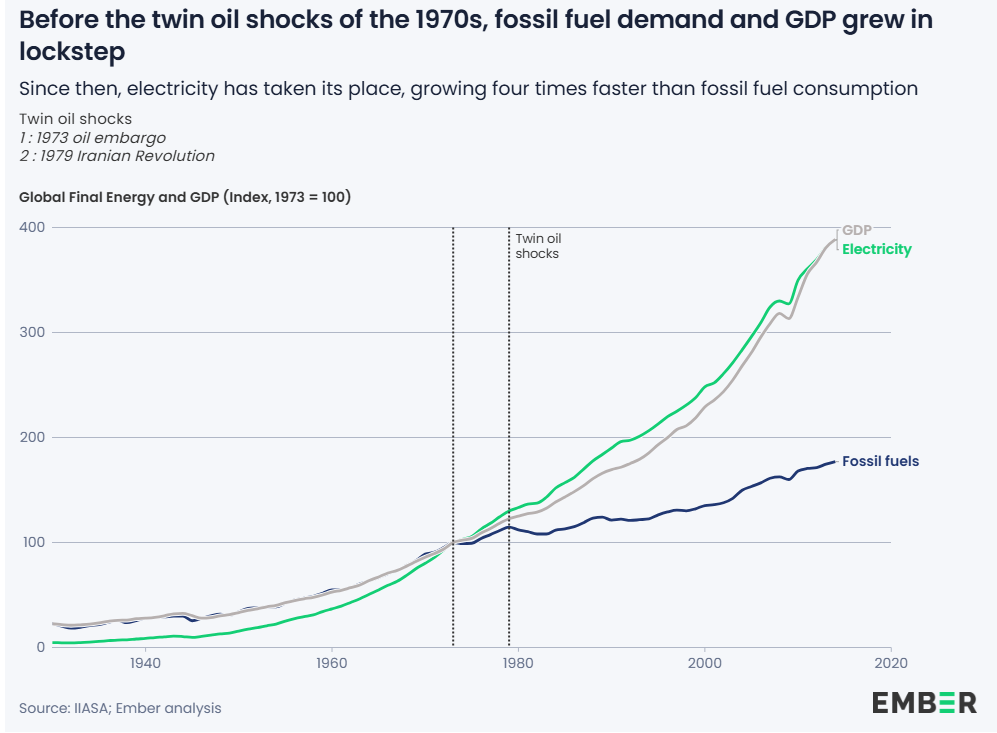
The New Twin Fossil Shock: How the energy crises of the 2020s speed up the electric age
EMBER explores how the the 2022 Ukraine invasion and the 2026 Strait of Hormuz closure parallel the oil shocks of the 1970s. Furthermore, they take a look at how, for the first time, there are scalable, cost-competitive alternatives to fossil fuel including solar, wind, batteries, EVs and more.
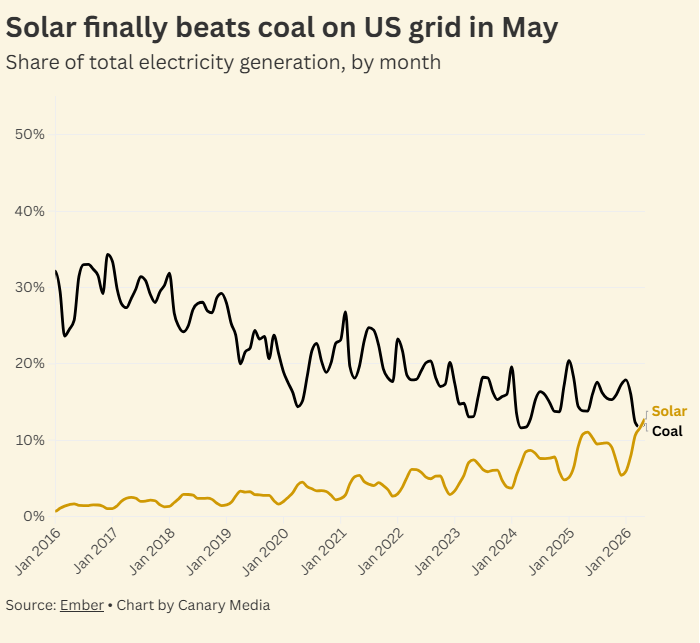
This Spring, Clean Energy in the US set Record After Record
Canary Media explores four ways clean energy set new records this spring, and what this tells us about where the energy system is headed.
Sesame Solar's Demo Nanogrid is in Michigan!
Email us at TeamSesame@sesame.solar if you're interested in a demonstration.


Ann Arbor’s Sesame Solar-powered mobile resilience unit now has a community-chosen name: The ARBOR. Designed as a self-sustaining solar, hydrogen, and battery-powered unit, The ARBOR is helping the city bring clean energy, shade, education, and resilience resources directly to residents.

CleanTechnica: Combat Drones Are Pivoting Into Green Hydrogen Fuel Cells
Drone warfare is front and center in Russia’s war against Ukraine and US President Donald Trump’s war against Iran. Much of the attention goes to unmanned aerial vehicles, but robotic applications on the ground are rapidly emerging as well. That brings up the question of how best to power these devices, and green hydrogen stakeholders are among those making the case for fuel cells.
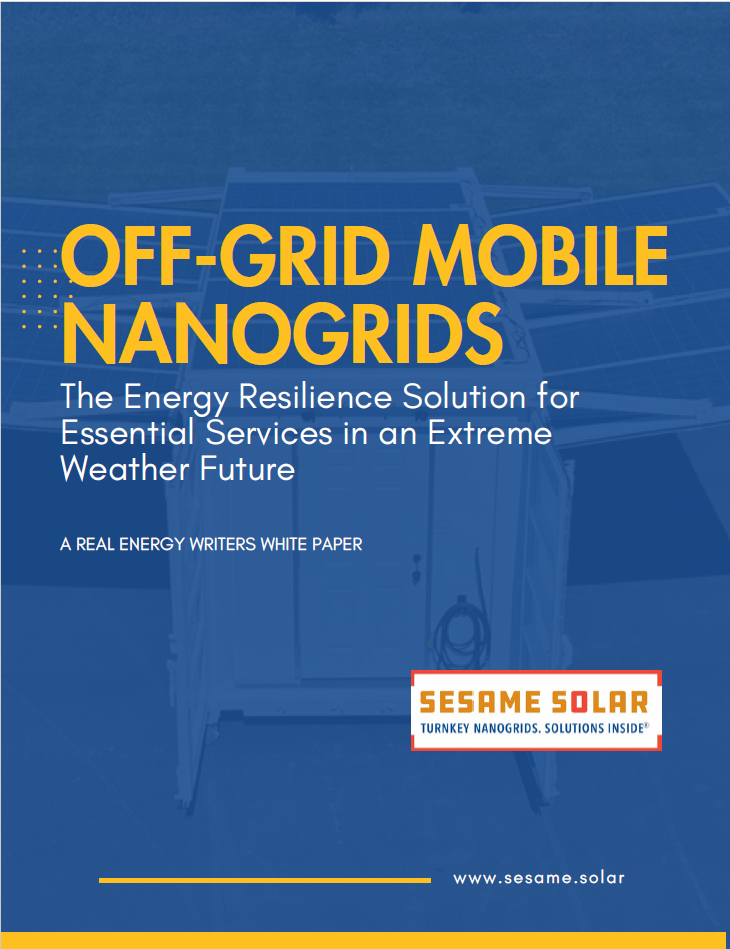
Off-Grid Mobile Nanogrids: The Energy Resilience Solution for Essential Services in an Extreme Weather Future
Download Sesame Solar’s White Paper to:
- Learn about several essential service and emergency response scenarios served by Sesame Solar's Mobile Nanogrids.
- Discover the distributed energy resources (DERs) that can combine to create a closed-loop Nanogrid that delivers clean, self-generating, reliable power 24/7.
- Understand the many benefits these systems deliver for customers.
- Read about cases in which Mobile Nanogrids have already served emergency responders and essential services in the wake of extreme weather.