From Conflict Zones to Crisis Zones: Why Energy Independence is Mission-Critical
Excerpt
Energy independence is no longer just a battlefield concern. It is becoming essential everywhere operations cannot afford to fail. From military deployments to disaster response and critical infrastructure, organizations need power systems that reduce fuel dependence, strengthen resilience, and keep missions moving when the grid is unavailable or unreliable. This article explores why energy independence has become mission-critical across both conflict zones and crisis zones, and how mobile, renewable power solutions are changing what is possible.
Key Takeaways
- Energy independence ensures mission continuity when the grid or fuel supply is compromised. Organizations can't afford to wait for repairs or resupply. Autonomous systems provide critical power immediately.
- The same mobile power technology can serve both national defense and civilian sectors. From battlefield logistics to disaster response, mobility and reliability are universal needs.
- Investing in decentralized energy solutions strengthens national and operational security. Less dependence on long supply chains means fewer vulnerabilities and fewer delays.
- Adaptable, mobile energy solutions reduce operational risk and boost long-term readiness. As needs evolve, power systems must scale, relocate, and restart with minimal effort.

In the deserts of the Middle East and the floodplains of the Gulf Coast, one truth stands out: without reliable power, operations grind to a halt. Whether in military deployments or commercial sectors affected by natural disasters and infrastructure failures, energy access is more than a utility, it’s a lifeline.
Energy independence, once seen primarily through the lens of national policy, is now an operational imperative. With growing concerns about grid reliability, supply chain interruptions, and increasingly severe weather events, both public and private sectors are rethinking how they generate and maintain power. The question isn’t if a disruption will occur—it’s when, and how prepared we are to continue operating when it does.
Parallel Challenges: Defense and Domestic Preparedness
1. Defense Operations: Built to Withstand the Unpredictable
For decades, military forces have faced the challenge of maintaining power in contested, remote, or rapidly shifting environments. Diesel generators have long been the standard, but they come with steep trade-offs: logistical risks, fuel costs, mechanical maintenance, and exposure to attack. Fuel convoys are high-risk operations. Generator noise can compromise stealth. And equipment wear and tear from overuse leads to mission-critical breakdowns.
The Department of Defense has increasingly recognized that energy resilience is directly tied to mission success. Reliable, mobile power must be secure, quiet, and capable of supporting data-driven, tech-enabled operations. From command and control systems to communications and surveillance, today’s defense missions run on electricity and lots of it.
2. Domestic Operations: Responding to Grid Stress and Emergencies
Back at home, the need for resilient energy is just as real. Consider a rural hospital during a major storm. A telecommunications tower after an ice event. A food distribution warehouse that needs to operate through a blackout. These aren’t combat zones, but they’re high-pressure situations where power failure can lead to serious consequences.
In recent years, widespread grid failures and severe weather have strained public utilities and exposed gaps in emergency preparedness. Outages are lasting longer. Backup systems are being pushed to the limit. And entire communities are left without communications, refrigeration, medical equipment, or transportation.
Despite the differences in location and circumstance, both military and civilian sectors face the same fundamental challenge: how to maintain critical operations when grid access or fuel delivery is no longer guaranteed.
What Energy Independence Looks Like in the Field
Energy independence doesn’t mean cutting ties with utility providers or abandoning infrastructure. It means ensuring continuity when the unexpected occurs. It’s about self-sufficiency and powering systems that work even when the grid is offline or inaccessible.
For a forward-operating military base, this might mean mobile power units that are rugged, easily transported, and don’t require ongoing fuel deliveries. For a healthcare facility, it might mean backup systems that can run silently and cleanly for extended periods. For a telecom provider, it’s the ability to restore coverage immediately after an outage, no matter the location.
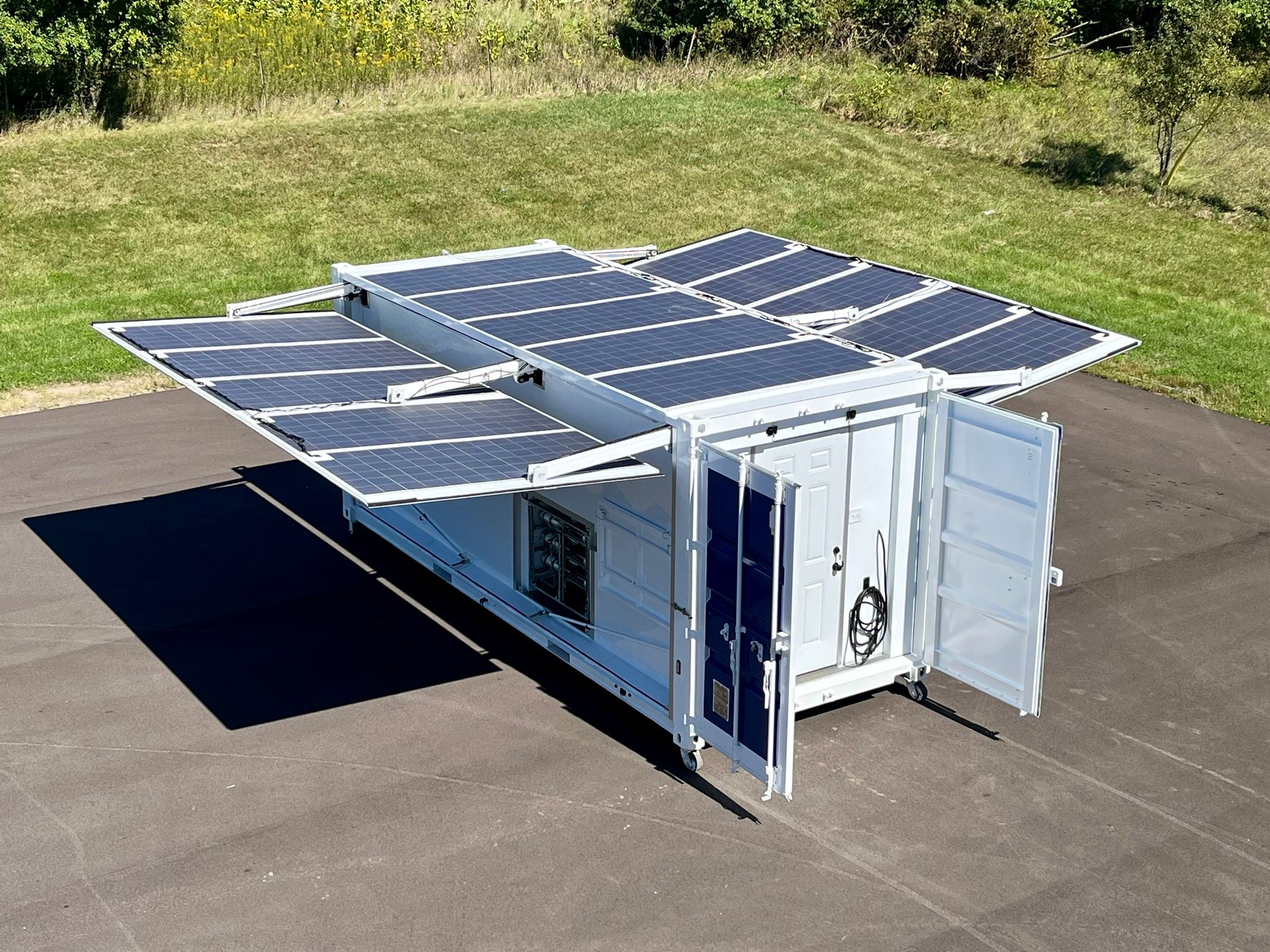
Modern mobile energy systems—especially those that integrate renewable sources with battery storage—offer scalable solutions for both field deployments and fixed sites. These systems can be transported quickly, set up rapidly, and run autonomously. No noise. No reliance on fuel convoys. No waiting for the grid to come back online.
One Technology, Multiple Sectors
Military, public, and private sector organizations are increasingly turning to mobile power solutions that offer flexibility and security. These systems can serve as primary energy sources in remote locations or as backup in high-risk areas prone to disruption.
In the defense world, they’re being used to power field hospitals, surveillance stations, and mobile command centers. In the commercial space, they’re supporting data centers, telecom hubs, supply chains, and emergency response centers.
The same qualities that make these systems useful in war zones—speed, resilience, and autonomy—also make them valuable in disaster zones, underserved areas, and logistics hubs. It’s a rare case where one innovation crosses boundaries to serve multiple missions.
Rising Demand for Resilient Power
Power continuity is no longer a nice-to-have; it’s non-negotiable. Military operations are becoming more data-intensive. Civil infrastructure is more digitally dependent. And extreme weather, cyber threats, and physical vulnerabilities are exposing the limitations of legacy systems.
Local and state governments are incorporating mobile energy into emergency response strategies. Large enterprises are reassessing their energy security protocols. And federal agencies are setting new expectations for operational continuity—especially in high-priority sectors like healthcare, communications, and food supply.
Every sector with critical operations must now think like the military: assume disruption, and plan accordingly.
Why Mobility Matters
Mobility is one of the most important features of any modern energy solution. In fast-moving scenarios, whether it’s a deployed unit, a relief convoy, or a regional utility, speed and adaptability are vital. Systems must be ready to go, easily transported, and capable of functioning in harsh environments.
Whether it's truck-mounted, trailer-hitched, or containerized, mobile energy provides a tactical edge. It eliminates downtime, reduces dependence on grid timelines, and empowers teams to work where infrastructure doesn’t exist—or no longer works.

FAQ
What does energy independence mean in mission-critical operations?
Energy independence means having the ability to generate and use power without relying completely on the electric grid, fuel deliveries, or fixed infrastructure. In mission-critical environments, this is essential because operations cannot pause during outages, disasters, or supply chain disruptions. For defense teams, energy independence can support command centers, communications, surveillance, and field operations in remote or contested locations. For civilian sectors, it can help hospitals, telecom providers, emergency response teams, and utilities continue operating when the grid is down. The goal is not to replace every existing power source, but to ensure there is reliable power available when traditional systems fail.
Why is energy independence important for both defense and disaster response?
Defense operations and disaster response may seem different, but they share a similar challenge: both need reliable power in unpredictable environments. Military teams may operate in remote or contested areas where fuel convoys are risky, while emergency responders may work in communities affected by storms, floods, wildfires, or blackouts. In both cases, delays in power restoration can affect safety, communication, mobility, and mission success. Energy-independent systems help reduce reliance on long supply chains and vulnerable infrastructure. This makes them valuable not only for national security, but also for local resilience and community recovery.
How do mobile power systems support emergency preparedness?
Mobile power systems support emergency preparedness by giving organizations a flexible source of electricity that can be deployed where it is needed most. Instead of waiting for grid repairs or fuel deliveries, teams can bring power directly to hospitals, shelters, communications sites, logistics hubs, or emergency command centers. This is especially important during widespread outages, when fixed infrastructure may be damaged or overwhelmed. Mobile systems can also be repositioned as needs change, making them useful for fast-moving crises. Their value lies in speed, adaptability, and the ability to keep essential services operating during disruption.
Why are diesel generators no longer enough for some critical operations?
Diesel generators remain widely used, but they come with limitations that can create risk in mission-critical environments. They depend on a steady fuel supply, require ongoing maintenance, produce noise and emissions, and may be difficult to refuel during disasters or in remote deployments. In defense settings, fuel convoys can create security vulnerabilities. In civilian emergencies, fuel shortages or blocked roads can make generator operations harder to sustain. Renewable mobile power systems with battery storage can reduce these risks by providing quieter, cleaner, and more autonomous power. They can also help supplement generators as part of a more resilient energy strategy.
What types of organizations can benefit from mobile renewable power?
Mobile renewable power can benefit any organization that needs reliable electricity in locations where the grid is unavailable, unstable, or temporarily disrupted. This includes military units, emergency management agencies, hospitals, rural healthcare providers, telecom companies, utilities, food distribution centers, universities, logistics operations, and local governments. These organizations often support essential services that cannot afford long interruptions. A mobile energy system can provide backup power, temporary power, or primary power depending on the situation. Its flexibility makes it useful across multiple sectors, from battlefield operations to community disaster recovery.
How does mobile power improve operational resilience?
Mobile power improves operational resilience by helping organizations continue functioning when normal power sources fail. Resilience is not only about surviving a disruption; it is about maintaining the ability to communicate, coordinate, protect people, and deliver services during difficult conditions. Mobile power systems can be transported to high-need areas, set up quickly, and used to support critical equipment. This reduces downtime and gives teams more control during emergencies. For sectors like defense, healthcare, telecommunications, and emergency response, that kind of continuity can make the difference between stalled operations and an effective response.
Why does mobility matter in modern energy systems?
Mobility matters because crises rarely happen in convenient places. Power may be needed at a remote deployment site, a damaged neighborhood, a temporary command post, a field hospital, or a communications tower after a storm. Fixed infrastructure cannot always respond quickly to these changing needs. Mobile energy systems can move with the mission, allowing teams to bring power directly to the point of need. Whether trailer-mounted, truck-mounted, or containerized, mobile systems provide flexibility that traditional stationary backup systems cannot always offer. This makes mobility a major advantage for both defense readiness and domestic emergency preparedness.
Related Articles:
- Hydrogen-Powered UAVs: Why Longer Endurance and Fewer Fuel Convoys Matter
- New U.S. Solar Hydrogen Generator Powers Long-Endurance Drones
- Defense Energy Resilience Solutions | Mobile Nanogrids for Military Operations
- Why The Military Is Moving Beyond Diesel Power
- A Solar-Powered Hydrogen Station Could Let Military Drones Fly for Months Without Resupply
